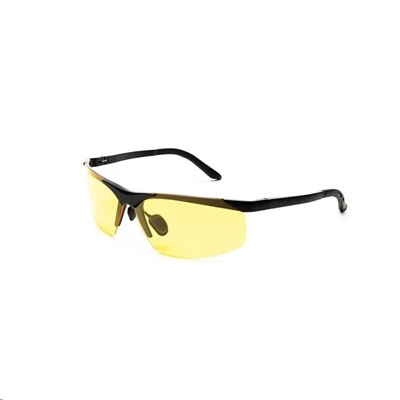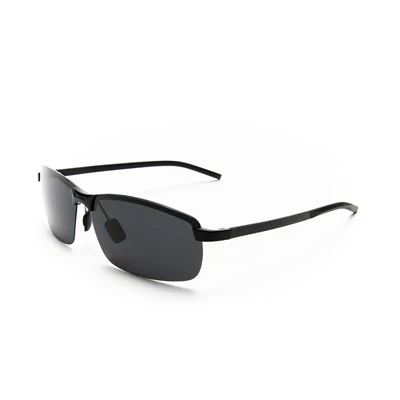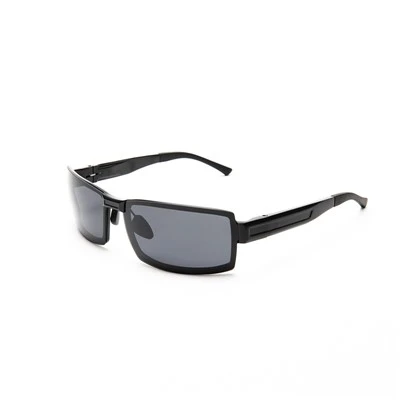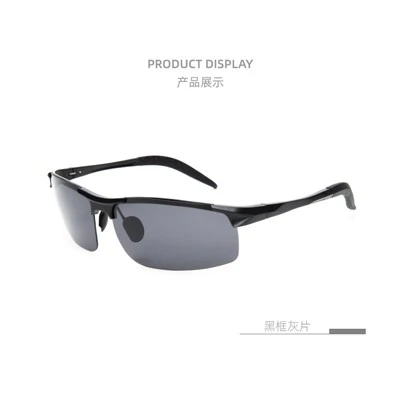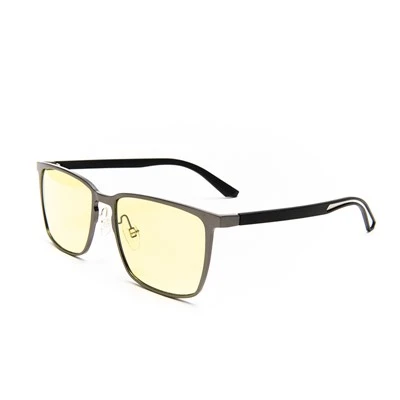
Sunglasses lenses can be broadly categorized into five types: anti-reflective lenses, tinted lenses, coated lenses, polarized lenses, and photochromic lenses.
Anti-reflective lenses: These lenses have a thin layer of magnesium fluoride coated on the surface to prevent strong light reflection, allowing for clearer vision without glare. To check if your sunglasses truly have anti-reflective lenses, point them at a light source. If you see a purple or green reflection, it means the lens does indeed have an anti-reflective coating.
Tinted lenses: Also known as "colored lenses," these lenses have chemicals added during manufacturing to give them color, absorbing specific wavelengths of light. This is the most common type of lens used in sunglasses.
Coated lenses: These lenses produce the same effect as tinted lenses, but the manufacturing process is different. The color is applied to the lens surface. The most well-known example is the "gradient coated lens," where the color is darkest at the top and gradually lightens towards the bottom. Prescription sunglasses often use this coated lens method.
Polarized Lenses: To filter glare from sunlight hitting water, land, or snow in a parallel direction, a special coating is added to the lens, creating polarized lenses. They are best suited for outdoor sports.
Photochromic Lenses: Also known as "photosensitive lenses." Because silver halide is added to the lens, the originally transparent and colorless lens turns tinted when exposed to strong light, providing protection. Therefore, they are suitable for both indoor and outdoor use.
Clip-on Sunglasses: Clip-on sunglasses are polarized sunglasses specifically designed for nearsighted people, effectively preventing glare and protecting against UV rays. They are particularly suitable for driving, outdoor activities, fishing, and other outdoor sports. Utilizing polarized lens technology, visual resolution is significantly improved. They eliminate 99% of reflected and scattered light, resulting in a clearer and smoother field of vision. The lenses are specially coated for enhanced wear resistance, scratch resistance, and impact resistance.
Night driving glasses: Night driving glasses should be able to block more than 80% of the glare from oncoming vehicles, while the light transmittance of the main lens must be greater than 75% to ensure that road observation is not affected. Wearing a good pair of night vision glasses at night will not only allow drivers to see the road clearly, but also effectively reduce the glare and other harmful light from the headlights of oncoming vehicles. While blocking strong light, drivers can still see the road clearly, thus ensuring driving safety.