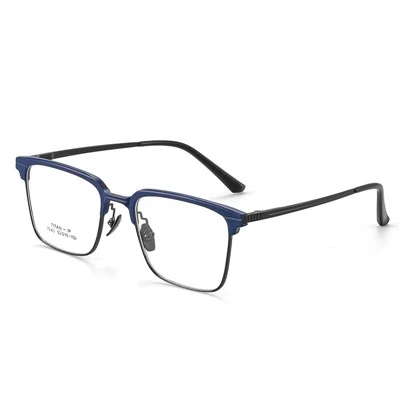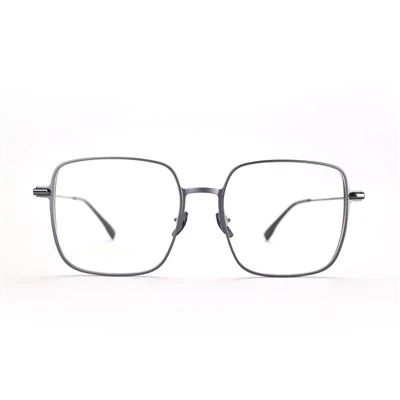

Titanium has emerged as a highly sought - after material in the eyewear industry, especially for frame reading glasses. As a leading supplier of Titanium Frame Reading Glasses, understanding the hardness of titanium used in our products is crucial. It affects not only the durability and longevity of the glasses but also the overall user experience.
The Nature of Titanium's Hardness
Titanium is a transition metal known for its remarkable strength - to - weight ratio. The hardness of titanium can be influenced by several factors, including its purity and the presence of alloying elements. In its pure form, titanium has a Mohs hardness of about 6, which is relatively hard compared to many common metals. For reference, the Mohs scale ranges from 1 (talc, the softest) to 10 (diamond, the hardest). Materials with a higher Mohs hardness are more resistant to scratching and abrasion.
However, in the context of frame reading glasses, pure titanium is rarely used. Instead, titanium alloys are employed to enhance the material's properties. These alloys can have a significant impact on the hardness. For example, adding elements such as aluminum, vanadium, or molybdenum can increase the strength and hardness of the titanium. Some titanium alloys used in eyewear can achieve a hardness equivalent to or even higher than that of stainless steel.


Why Hardness Matters in Reading Glasses
The hardness of the titanium frame is of utmost importance for several reasons. First and foremost, it directly relates to the durability of the glasses. Reading glasses are often used on a daily basis, and they can be subject to various forms of wear and tear. A hard - framed titanium reading glasses is less likely to get scratched or dented during normal use, such as when they are placed on a table or accidentally bumped against other objects.
Secondly, hardness contributes to the shape retention of the frames. Over time, glasses can lose their shape due to bending or pressure. A hard titanium frame can better maintain its original shape, ensuring a proper fit on the wearer's face. This is essential for both comfort and visual performance, as misaligned glasses can cause discomfort and may even affect the accuracy of the prescription.
Evaluating the Hardness of Titanium in Reading Glasses
As a supplier, we use various methods to evaluate the hardness of the titanium used in our Titanium Frame Reading Glasses. One common approach is the Rockwell hardness test. In this test, a small indenter is pressed into the surface of the titanium sample with a specific force. The depth of the indentation is then measured, and based on this measurement, a Rockwell hardness number is assigned. A higher Rockwell hardness number indicates a harder material.
Another method is the Vickers hardness test, which uses a square - based pyramid indenter. Similar to the Rockwell test, the size of the indentation made by the indenter is measured, and a Vickers hardness value is calculated. These tests allow us to ensure that the titanium used in our frames meets the required hardness standards, guaranteeing high - quality products for our customers.
Our Product Range and Titanium Hardness
We offer a diverse range of titanium frame reading glasses, each with its own unique properties related to hardness. Our Ip Titanium Glasses are crafted from a special titanium alloy that provides excellent hardness and corrosion resistance. This makes them ideal for long - term use, even in harsh environments.
The Superlite Titanium Glasses are another popular option. Despite their lightweight design, they are made from a high - hardness titanium alloy. This combination of lightness and hardness ensures a comfortable fit without sacrificing durability.
For female customers, our Titanium Rimless Glasses for Lady are designed with a focus on elegance and functionality. The titanium used in these glasses has been carefully selected for its hardness, ensuring that the delicate rimless design remains intact and durable over time.
Our Titanium Progressive Reading Glasses also benefit from the high hardness of titanium. Progressive lenses require a stable frame to maintain the accuracy of the prescription at different viewing distances. The hard titanium frame provides the necessary support and stability for these complex lenses.
The Future of Titanium in Reading Glasses
Looking ahead, the use of titanium in reading glasses is likely to continue to grow. Advances in materials science may lead to the development of new titanium alloys with even higher hardness, better corrosion resistance, and reduced weight. These improvements will enhance the performance and appeal of titanium frame reading glasses.
As a supplier, we are committed to staying at the forefront of these technological advancements. We will continue to invest in research and development to ensure that our products are made from the best - quality titanium, offering our customers the highest level of durability, comfort, and style.
Conclusion and Contact for Purchase
The hardness of titanium used in frame reading glasses is a critical factor that directly affects the quality and performance of the product. As a trusted supplier of Titanium Frame Reading Glasses, we take great pride in providing high - quality products crafted from the finest titanium alloys. Our diverse product range, including Ip Titanium Glasses, Superlite Titanium Glasses, Titanium Rimless Glasses for Lady, and Titanium Progressive Reading Glasses, offers something for every customer.
If you are interested in exploring our product line further or have any questions about our titanium frame reading glasses, we invite you to contact us for a detailed discussion. We are eager to help you find the perfect eyewear solution that meets your needs.
References
- Callister, W. D. (2007). Materials Science and Engineering: An Introduction. John Wiley & Sons.
- ASM Handbook Committee. (2000). ASM Handbook Volume 2: Properties and Selection: Nonferrous Alloys and Special - Purpose Materials. ASM International.